Showing posts with label oral history interviews. Show all posts

Saturday, May 25, 2013

Ardra Whitney: Week 37 @ Avery Research Center


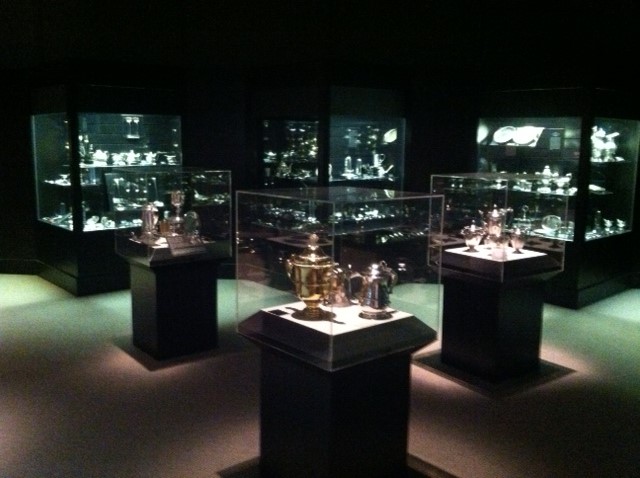
Fellowship Extras: A video clip from my trip to the Charleston Museum two Saturdays ago on May 11th. I had been taken photos of the museum's various exhibits and didn't realize I had switched my iPhone camera to record. Scroll to the end to see more photos of my visit.

Monday, May 13th - Tuesday, May 14th:

I continued my processing work on the Virginia Geraty Papers: foldering collection materials, labeling folders and drafting the collection’s finding aid. By Thursday, I had completed work on approximately seven out of nine boxes from the collection. On Tuesday, I finally got a chance to add Cynthia McCottry-Smith’s interview on the Phillis Wheatley Literary and Social Club and Manager of Archival Services, Aaron Spelbring’s interview on the Abolitionist Map of America project to Avery’s Z: drive. Avery’s Resident Scholar, Dr. Dwana Waugh and myself have been trying to upload these interviews for some time now but there always seemed to be some computer issue preventing us from doing so. I remember one time when we were trying to upload the interviews, the computer we were working on didn't have the Z: drive mapped to it. Another time, we tried burning the interviews to CDs but the files were too big to transfer. At any rate, they’re on there now. Phew!

At noon, I corresponded with Processing Archivist, Georgette Mayo and Administrative Assistant, Savannah Frierson, via e-mail about enlisting the help of some volunteers to assist me with wrapping up processing on the Virginia Geraty Papers. Ms. Frierson and I drafted an announcement calling for volunteers, which she out to students in the Avery Scholars program. The scholarship program was established to increase enrollment at the College of Charleston of “first generation, underserved and economically disadvantaged students.”

Wednesday, May 15th - Thursday, May 16th:

In the morning, I prepared a brief report on my work to-date at Avery Research Center for this month’s final IMLS Fellows Conference Call with The HistoryMakers. After that I checked my College of Charleston e-mail account and saw I had received an e-mail from student, Jada Nicole Brown; expressing her interest in volunteering for the Virginia Geraty Papers processing project. I was thrilled to her response and happily replied— asking her about her availability. Now I’m just waiting to hear back from her, so we can arrange her volunteer schedule. Also on Wednesday, Thursday and Friday, I updated Avery’s Facebook and Twitter pages with posts about African American history, culture and current events. Doing this gave me the opportunity to check out Virtual Photo Walks on Google+ and YouTube. Viewing the project made me think it might be a viable social networking tool to promote tours of Avery online, in addition to walking tours pertaining to black history in Charleston.

Friday, May 17th:

I returned to Beaufort, SC to continue my research on the Beaufort District Collection’s materials relating to Hoodoo and African American folk magic traditions. Librarian, Charmaine Seabrook took photos of former Beaufort Sheriff J.E. McTeer’s scrapbooks for me to include in my poster presentation for the 2013 SAA Conference in New Orleans. Earlier in the week, Librarian, Grace Cordial sent me a request form for permission to publish reproductions and graphic images from the Beaufort County Library; I completed and printed the form to give to her once I had uploading the scrapbook images to my computer. Afterwards I reviewed materials I didn’t get to see during my first trip, like typed correspondence from Albert F. Sulprizio suggesting ways McTeer could secure funds for a motion picture of his book: Fifty Years as a Low Country Witch Doctor.

While the Beaufort County Library holds personal collection items from Sheriff J.E. McTeer, it holds none from McTeer’s infamous rival, Stephaney Robinson, a.k.a “Doctor Buzzard”. My research left me wondering if there was a relative, friend or some other person connected to Robinson that I could contact to learn more about him. Luckily, one of the items I discovered during my research at the library was an article on Artists, Andy and Bernice Mitchell Tate. Back in December the husband and wife created an art exhibit based on the legends and factual history of Doctor Buzzard. Mrs. Tate also had an exhibit at Avery in September of 2012, titled: Remembering “Her” Time. The exhibit was a tribute to Tate’s mother, Veronica Robinson-Mitchell, and explored the collective spirit of African-American female identity and womanhood. I am making plans to contact Mrs. Tate, so that she can share with me what she and her husband learned about Doctor Buzzard in preparation for their exhibit, Doctuh Buzzard’s Rootworks

Fellowship Extras Continued:
Free Badge: Copper, Charleston, 1783-1789. "Like the copper labor badges issued to working slaves in Charleston, free badges were dispensed as a method for identifying 'free negroes' within Charleston's city limits".
 Indigo: Natural Blue Dye in the Lowcountry An Original Exhibition.
"Because of its range of blue color and lightfastness, [indigo] was easily the most popular natural blue dye for many centuries. Before the advent of synthetic dyes in 1856, all yarn and fabric was dyed with natural dyestuffs. Indigo, a leguminous plant grown in many parts of the world, did not thrive in Europe. Obtaining quality, affordable indigo was a challenge for Europeans and colonists until the 18th century when a young girl from the South Carolina Lowcountry, named Eliza Lucas Pinckney, achieved this goal. Carrying out her father’s instructions with the benefit of an enslaved labor force, Pinckney succeeded in making the South Carolina Lowcountry a prime cultivator of indigo, which in turn allowed the plant to become a rich cash crop second only to rice."
The Loeblein Gallery of Charleston Silver displays a number of exquisite works dating from the colonial era through to the Victorian age.
Chamber pots on display in the museum's bathroom entrance.
Privy trivia on the back of the bathroom stalls.

Tuesday, March 19, 2013

Ardra Whitney: Week 28 @ Avery Research Center


Monday, March 11th - Thursday, March 14th:
I began the week by continuing to survey the Virginia Geraty Papers and plan the Women’s History Exhibit on the Phillis Wheatley Literary and Social Club. On Tuesday, I followed up with C.A. Brown High School Alumni Association President, Joey Washington and got his permission to use high school newspaper and yearbook photos for the Black in the Lowcountry: Digital Photo Archive project. On Wednesday morning I conducted an oral history interview with Associate Professor of Arts Management at the College of Charleston, Dr. Karen Chandler about her membership with the Phillis Wheatley Literary and Social Club. I thoroughly enjoyed listening to her speak about her work with the college’s Arts Management Program, as well as the Charleston Jazz Initiative and of course her participation in the Phillis Wheatley Literary and Social Club. One of the things she said during her interview that resonated with me, was how the club gives her the opportunity to be in the company of other African-American women that she shares personal and professional interests with. She also remarked on how gratifying it is to be around her fellow clubwomen, because of her great admiration and respect for the work that they do. In the afternoon, I posted an article from CHARLIE magazine to Avery’s Twitter page about Executive Director, Dr. Patricia Williams Lessane. In the article she is featured as one of Charleston’s 50 most progressive people and discusses what it means to be a “progressive leader”. On Thursday, I contacted Cynthia McCottry-Smith and left a voicemail asking if she had any photos of the Phillis Wheatley Literary and Social Club’s Founder, Jeanette Cox that I could include in the Women’s History Month Exhibit.

Friday, March 15th:
I continued surveying the Virginia Geraty Papers, completing 7 out of 12 boxes. I created an item list for 60 out of approximately 90 some-odd spiral notebooks from the collection, which contained notes on everything from books of the bible translated into Gullah, Gullah vocabulary, educational materials, and preparation for the production of Porgy: A Gullah Version at the Garden Theatre. Additionally, I began placing the items I had selected for display and narrowing down the number of items to be part of the exhibit. In the afternoon, I stopped by Trident Technical College to meet with Phoebe Williams, where she burned all the images we had scanned related to C.A. Brown High School onto a CD. In the coming months, I will be posting these images on the Black in the Lowcountry: Digital Photo Archive's Tumblr page.

Sunday, November 18, 2012

Ardra Whitney: Week 11 @ Avery Research Center

Monday, November 12th:
On Monday morning, I spoke with Manager of Archival Services, Aaron Spelbring about developing a preliminary finding aid/inventory for Avery’s oral history collection, which is comprised of hundreds of interviews relating to the African American experience in the Lowcountry. The collection’s strength is in documenting the civil rights movement, as well as education in Charleston, and Gullah culture. During the day, I followed up with Public Historian, Dr. Robert T. Chase regarding clips from his oral history interviews with Robert Barber, owner/manager of Bowen's Island Seafood Restaurant; Victor “Goat” Lafayette, who was employed by the restaurant for many years and procured its seafood; restaurant patrons, Fred Wichmann and Steven Hoffius; and Samuel Backman of Backman Seafood Company. We are planning to feature some or all of the interviews on Avery’s YouTube channel and Facebook page as part of Story Corps' National Day of Listening.

Tuesday, November 13th:
I attended an enlightening workshop on socioeconomic class inequality led by College of Charleston’s Director of Diversity Education and Training, Kristi Brian. After the workshop, Ms. Brian showed me the Diversity Education and Resource Center Library and we got into a conversation about library management systems (i.e., software, barcode printers and scanners) that would work well for the resource center’s small library. In addition, I submitted articles on the Between the Tracks at 25 Symposium held at Trident Technical College, Palmer Campus last month; and on recently processed collections: W. Melvin Brown, Jr. Papers, and Edwina Harleston Whitlock Papers, for the Avery Messenger.

Wednesday, November 14th:
I participated in a field trip to Drayton Hall; along with Education Outreach Coordinator, Shelia Harell-Roye and Curator, Curtis J. Franks and Avery’s graduate assistants. Drayton Hall’s main house is over 265 years old and is the “oldest surviving example of Georgian-Palladian architecture in the United States.” The purpose of the tour was to acquaint our group with the do’s and don’ts of conducting historical tours, as well as providing us with useful information on architecture, the Drayton family, decorative arts, African-American history and historic preservation.

Thursday, November 15th:
By Thursday afternoon, I had completed my interview evaluation for Jawole Willa Jo Zollar. I still cannot get over her outrageous and funny stories about being a foul-mouthed soap eating “wild child”, while growing up in Kansas City, Missouri. I touched base with Reference Librarian, Deborah Wright about making edits to the articles I submitted for the Avery Messenger. I look forward to reviewing her comments and feedback next week. Ms. Wright also suggested I contact Professor Susan Millar Williams at Trident Technical College in order to get some photographs to accompany my article on the Between the Tracks at 25 Symposium.

Friday, November 16th:
I corresponded with Professor Williams via e-mail and thanked her for sending pictures from the symposium-- she sent some really wonderful shots from the program and of Ms. Harell-Roye. In addition, I completed encoding my first finding aid for the W. Melvin Brown, Jr. Papers using NoteTab.

Sunday, November 11, 2012

Ardra Whitney: Week 9 @ Avery Research Center


Monday, October 29th Wednesday, October 31st
At the beginning of the week, I met with Processing Archivist, Georgette Mayo and Manager of Archival Services, Aaron Spelbring to discuss revisions to the finding aid draft for the W. Melvin Brown, Jr. Papers; the collection arrangement for the Edwina Harleston Whitlock Papers; and creating EAD finding aids in NoteTab. I also continued my work with drafting a finding aid for the Edwina Harleston Whitlock Papers: editing the biographical and scope and content note; revising the collection’s series arrangement and folder list and adding subject headings. Additionally, I brainstormed with Reference Librarian, Deborah Wright and Ms. Mayo about developing potential programs, workshops, events and social media initiatives to raise awareness about Avery’s archives.

Thursday, November 1st Friday, November 2nd
By Thursday, I had begun evaluating ArtMaker, Jawole Willa Jo Zollar’s video oral history interview. Zollar is the founder of the all-female African-American dance company, Urban Bush Women. On Friday, I corresponded with Public Historian, Robert T. Chase and spoke with Ms. Wright about an e-mail from Founding Director of Lowcountry Africana, Toni Carrier, regarding Story Corps' National Day of Listening.

Sunday, July 1, 2012

HBCUs: Alex Champion’s Week 4


My on the job education of black history is increasing with every interview. The interviews with every HistoryMakers are all very personal of course but they describe their times almost as much as they describe themselves. I recently evaluated the 2003 interview of a French instructor at Morgan State University in Baltimore. He described his very busy life as he continued working and getting an education but also his time in World War II. His apparent brilliance convinced the army to run him through the Army Specialized Training Program. The best oral history descriptions contain a lot of verified information such as names and dates; upon looking up the ASTP on Wikipedia I saw that prominent men such as Bob Dole, Ed Koch, Mel Brooks, and Gore Vidal went through the program as well. The HistoryMaker himself was reminiscent of Vidal, oddly enough. Upon further verification of his stories I found a biography of the Inspector General of the Army, to whom the HistoryMaker served as executive assistant; it was very surprising to see that a black man in a very white training program in a segregated army personally served an Inspector General from Mississippi. These little bits of history chip away at naïve perspectives.

Every human being is naïve on particular subjects; for me one of them is black culture. I was raised by my black father and white mother in a small town in southern Minnesota. I went received my undergraduate and master’s degrees from the University of Wisconsin—Madison. This was a school that very actively sought diversity and, in its 2001-2002 undergraduate application guide, digitally edited the face of a black student named Diallo Shabazz onto the cover. The school used his image many times for its promotional publications—they owned the image and he did not mind—but this time they used digital trickery to misrepresent a real image.  He eventually won a suit but asked that the money be used for diversity initiatives.

I had an interesting series of conversations with Julieanna Richardson throughout Week 4. One of her main goals for the IMLS grant and one of the several reasons The HistoryMakers exists is to disseminate talented, competent archivists whose interest in black archives will save the black historical record. She expressed this hope to me; I thought she was talking about community archives but instead it was the “HBCUs.” She was mortified to learn that I did not know what those were. How could I not know that? I must have heard them talk about HBCUs in the interviews! Indeed they did, but they called them “historically black colleges.” Despite my black culture naiveté I was familiar with that term and the HistoryMakers never, ever used the acronym. Their college experiences were not abstractions that merited shorthand; it was their own life at Central State, Morehouse, Howard, Virginia Union, and Morgan. Julieanna was raised like I was in a small town in the Midwest but attended an HBCU, which transformed her perspective. Perhaps this fellowship will transform my own as well and I will be compelled to go forth just as she hopes we all will.

Sunday, June 10, 2012

Ardra Whitney: Week 1 @ The HistoryMakers

Greetings from the Windy City!


For the next 3 months, I will be calling Chicago home as I participate in the 2012 IMLS Summer Immersion Program with The HistoryMakers. The week was filled with several meetings and presentations from HistoryMakers staff, including: Julieanna Richardson, Public Historian and Founder/Executive Director; Dan Johnson, Digital Archivist; Jessica Levy, former Research and Program Coordinator; Y’Houshua Murray, current Program Coordinator; Alison Bruzek, NSF Project Director; and Paul Mackey, Production Manager. Through these various meetings and presentations, fellows received an introduction to The HistoryMakers Digital Archive collection; discussed grant expectations; and learned about the organization’s office and archival procedures. We also got to do some really neat ice breakers to help us become more acquainted with one another.

On Wednesday, June 6th, fellows had their first African American history lecture with Christopher R. Reed, Professor Emeritus with the Department of History and Philosophy at Roosevelt University. Reed began the lecture by sharing photos and stories about African Americans like journalist and newspaper editor, Ida B. Wells and her husband, newspaper owner, Ferdinand L. Barnett.  He also showed us 19th century photographs of his great grandparents, who were former slaves. His great grandfather, he said, served in a colored infantry during the Civil War. My favorite part of the lecture was Reed’s discussion of the black presence at the World’s Fair of 1893-- because he mentioned the Fon people from the Dahomey Kingdom in West Africa. I find this group of African people to be particularly fascinating because the Dahomean state maintained an all-female military regiment for nearly 200 years. The women warriors were referred to as Mino, meaning "Our Mothers" in the Fon language.

“The simulated village of the Fon people from Dahomey was among the most widely publicized and frequently visited fair sites. Newspapers and magazines extensively covered the exhibit, photographers included it in souvenir booklets, and many observers flocked there each day. The interest in this exhibit, perhaps more than any other, revealed the disparity in perceptions of Africans by an international audience. Some people saw at the exhibit the rich culture of the Fon people, as well as a reminder of a distant African past that had shaped all humanity--as did Bishop Henry McNeal Turner of the African Methodist Episcopal church, commenting at the concurrent Conference on Africa held in Chicago, publicly expounded his belief that all humanity started black" (p. 184). Other fair goers saw in the Fon village a non-industrial, rural lifestyle that was anathema to their Victorian tastes. The scantily clad, bare breasted women and the robed men with their traditional musical instruments and other accouterments both fascinated and repelled many fair goers.”
 - Excerpt from Reed’s book "All the World Is Here!": The Black Presence at White City
On Thursday, June 7th and Friday, June 8th, fellows participated in a 2-day training session on Encoded Archival Description (EAD) and Encoded Archival Context—Corporate Bodies, Persons, and Families (EAC-CPF)  led by Katherine Wisser, Assistant Professor and Co-Director of the Archives/History Dual Degree Program at Simmons College. In addition to her informative and well-presented workshop, Wisser provided great insights into professional networking in the field of archival encoding/description. Case in point, Wisser’s continued interest and participation in the development of EAC-CPF has made her Chair of the EAC Working Group and allowed her to collaborate with information professionals from all around the world.  

At the end of the Summer Immersion Program, I will be responsible for completing 30 interview evaluations and EAD/EAC-CPF finding aid assignments. This week, I completed my first interview evaluation assignment for head waiter, letter carrier, and humble activist, Alvin Little. In watching Little’s interview, I was almost moved to tears by the power and simplicity of his life experiences. He realized early on that nobody would give him anything and that if he wanted something he would have to work for it. In his interview, Little says that in order to be successful in life, one must qualify themselves to achieve their personal and professional goals. Congruently, I look forward to learning from and contributing to my fellowship experience--as much as possible--so that I can qualify myself to do outstanding work as an archivist.

Ardra Whitney
IMLS Fellow
Avery Research Center for African American History and Culture